A Biological Breakthrough in Tissue Survival
Scientists have discovered that severed tissues from a species of sea cucumber, Psolus fabricii, can survive indefinitely in ordinary seawater. This unprecedented finding challenges long-held assumptions about tissue viability outside a host organism. The discovery opens new avenues for research into regeneration and tissue engineering.
Unheard-Of Tissue Immortality
Typically, complex tissues decay rapidly once separated from their host. While organ transplants rely on keeping tissues alive, this requires sterile environments and nutrient-rich mediums. However, tissue from Psolus fabricii continues to live and even grow without such stringent conditions.
Sara Jobson, a researcher at Memorial University of Newfoundland and lead author of the study, described this as "naturally occurring tissue immortality." She added, "Having tissues that survive that easily is unheard of. We’ve never seen anything like this."
The Resilient Psolus fabricii
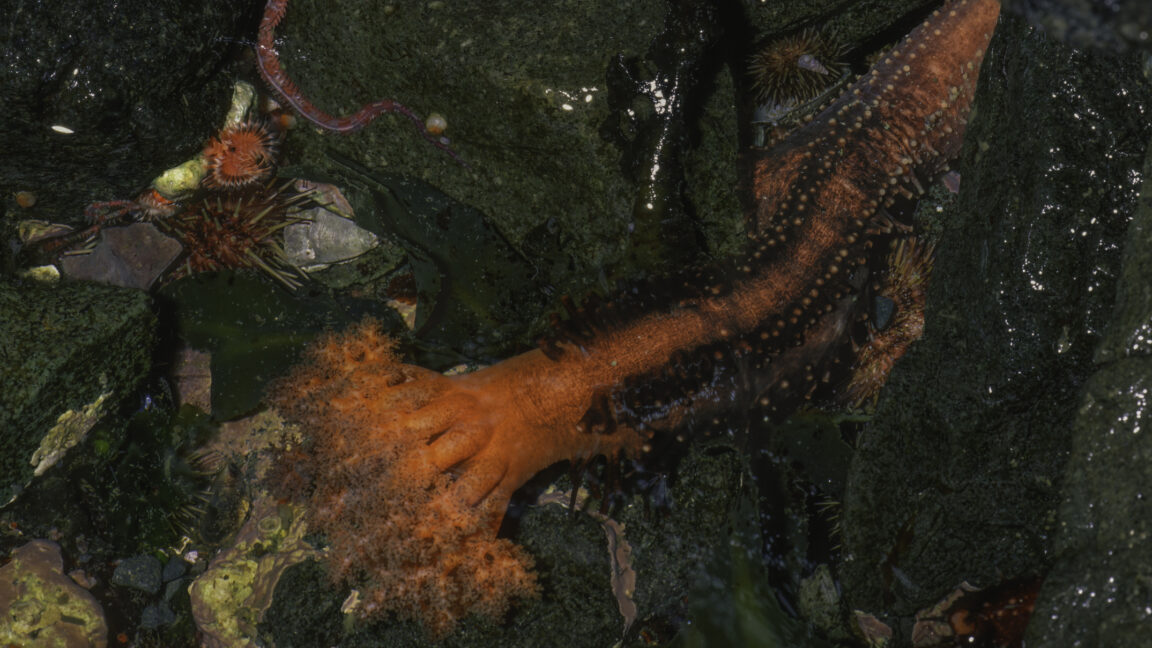
Psolus fabricii is a sea cucumber found in the cold waters of the Atlantic and Arctic oceans. This species is known for its remarkable capacity for regeneration, a trait developed due to frequent injuries in its harsh natural habitat. Its bottom side, or sole, has tube feet for gripping rocks, and it extends branching tentacles to feed on suspended particles.
Beyond Conventional Tissue Preservation
The study, published in Science Advances, documented the viability of amputated tissue for over three years in natural seawater. The explanted tissues exhibited cellular diversification, immune activity, and tissue reorganization. They also absorbed dissolved amino acids directly from the surrounding seawater, demonstrating self-sufficiency for nutrients. This behavior is unlike classic 'immortal' cell lines, which require axenic (germ-free) environments and do not show active healing or growth.
- Tissue fragments healed and reorganized internally without artificial conditions.
- Immune cells, called coelomocytes, cleared damaged material and digested muscle tissue.
- Tube feet shrank initially but recovered and grew larger than their original size.
- Tentacle explants maintained nerve function, responding to physical touch.
- The tissues absorbed nutrients directly from dissolved amino acids in seawater.
- Experiments ran for over three years, ending for publication, not tissue death.
"This is naturally occurring tissue immortality. Having tissues that survive that easily is unheard of. We’ve never seen anything like this." — Sara Jobson, Researcher, Memorial University of Newfoundland
Key Points
- Tissue from Psolus fabricii sea cucumbers survives indefinitely in ordinary seawater.
- The tissues heal, reorganize, and absorb nutrients without sterile conditions or growth factors.
- Sara Jobson led the study at Memorial University of Newfoundland.
The Bottom Line
This discovery fundamentally challenges our understanding of tissue survival and regeneration. While direct human applications are distant, the sea cucumber's unique biology offers an ethical model for studying healing, aging, and drug testing. It highlights the potential for groundbreaking biological innovations hidden in marine ecosystems.